What Click & Collect reveals about a retailer’s internal competence.
For years, retailers have spoken about Click & Collect as though it were simply another sales channel, a digital initiative that bridges the gap between the website and the physical store.
In reality, it has become something much more revealing. Today, Click & Collect is perhaps the clearest indicator of how well a business actually operates. Customers rarely judge Click & Collect in isolation; they judge the entire business through the ease of the purchase, collection or returns process.
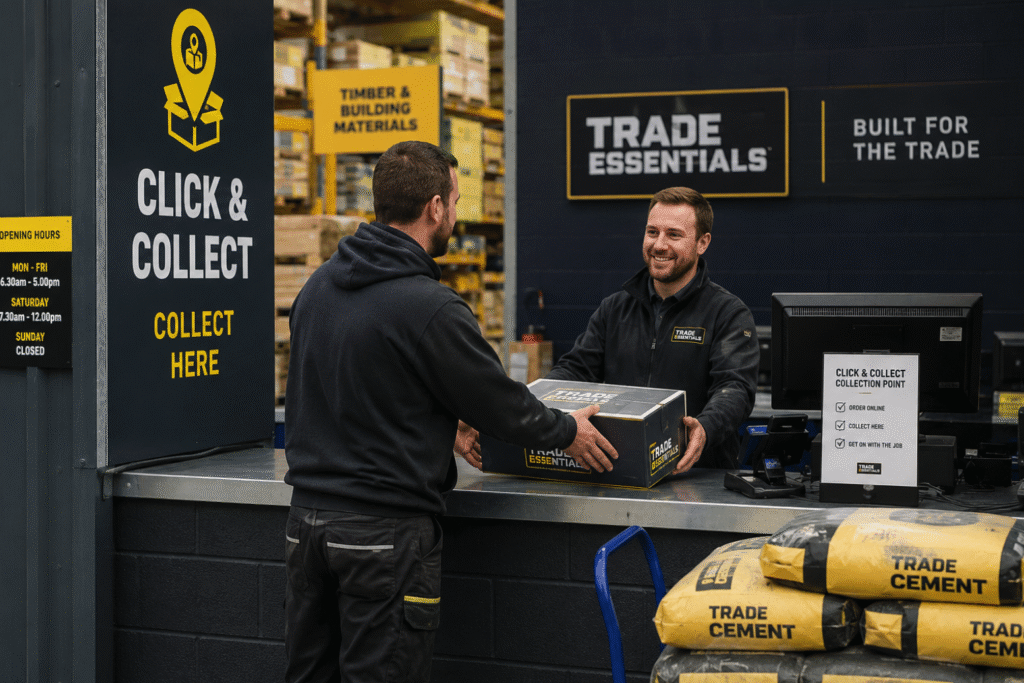
When a Trade or DIY customer places an order online for collection in a few days’ time, the same day or even an hour later, they aren’t assessing the quality of the website or admiring the sophistication of the retailer’s technology stack, they’re subconsciously testing dozens of internal processes that should quite rightly, be completely invisible to them.
Can the retailer locate the stock accurately? Are stock records reliable? Does the picking process work? Is the product data accurate? Are store colleagues communicating effectively? Can the customer collect or return the item quickly without queueing? Is the order complete, accurate and ready when promised?
If any one of these individual processes breaks down, the customer doesn’t blame stock management, the staff or the warehouse systems, they simply conclude that the retailer isn’t particularly organised, probably hasn’t invested in their systems and the outcome is that they will probably purchase somewhere else next time.
That’s why Click & Collect has evolved into one of retail’s biggest operational stress tests.
The modern customer wants friction free certainty
In recent years, it’s become clear that convenience has actually overtaken price as one of retail’s biggest competitive battlegrounds. Whether purchasing paint on the way home from work, collecting timber before heading to site or having replacement plumbing fittings delivered mid-job, customers increasingly value certainty above almost everything else.
Every customer wants to know three things: Is the product in stock, when can I get it and will it actually be ready when I get to the store? Those questions sound remarkably simple yet answering them consistently requires almost every department within the business to perform flawlessly. The website depends on accurate product information, availability depends on reliable stock accuracy, collection depends on efficient store operations, communication depends on integrated systems and ultimately customer satisfaction depends on every one of those working seamlessly together.
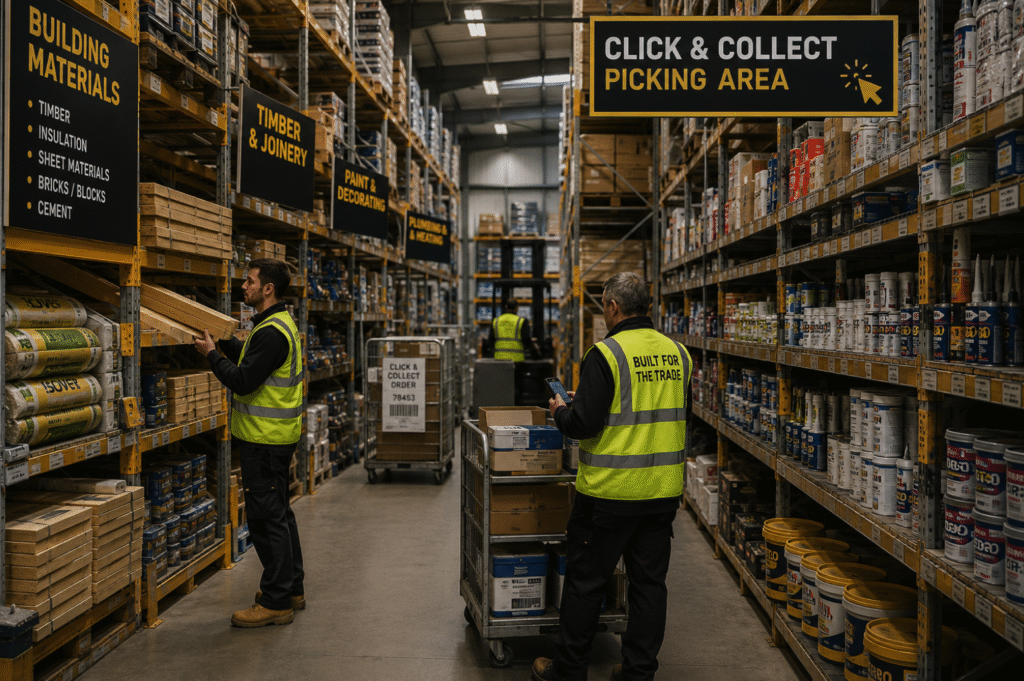
The customer only sees the final five minutes of the Click & Collect process, whereas the retailer or merchant may have spent years making those five minutes possible.
Every weakness becomes visible
One reason Click & Collect exposes operational weaknesses so effectively is because there is nowhere to hide. Traditional store shopping allows retailers to recover from problems. What I mean here is, if an item isn’t on the shelf, a colleague may find one in the warehouse or suggest an alternative and if pricing is incorrect, someone can manually override it. Day in day out, up and down the country, good staff are compensating for weak systems.
Click & Collect removes much of that flexibility. If the stock files are wrong, unfortunately the customer has already travelled to the branch. If finding and picking the product is delayed, expectations have already been set and commitments have been broken.
If communication fails, frustration arrives before the customer even reaches the store. The promise has already been made and breaking that promise damages trust far more than simply not offering the
service at all.
It’s no longer just an online service
Many retailers still measure Click & Collect through eCommerce dashboards. They celebrate order volumes, conversion rates and average basket values, yet these metrics only describe how successfully the order was sold. They reveal almost nothing about how successfully it was fulfilled. Customers don’t judge Click & Collect on conversion rates; they judge it on whether the order is complete, ready when promised and collected without friction. The retailers that understand this have stopped treating Click & Collect as an eCommerce KPI and started measuring it as an operational one, because it behaves much more like an end-to-end business process.
It starts with Marketing creating the interest, need and expectation, the Buying and Merchandising teams determine the range, Supply chain ensures availability and the IT and Digital teams enable visibility. Store operations then fulfil the promise, whilst Customer Service resolves exceptions.
Every department owns a small, but crucial part of the customer experience. It is this that makes Click & Collect one of the few retail services that genuinely reflects how well an organisation works together.
The branch becomes the fulfilment centre
This is particularly significant within hardware, DIY and Builders’ Merchants. Branches are no longer simply places where products are displayed and sold. Increasingly, they are becoming local fulfilment hubs, supporting trade account holders, site deliveries, walk-in customers and Click & Collect orders simultaneously.
This creates new operational pressures for the business, store layouts must support rapid picking rather than simply attractive merchandising, whereas stock locations need to be logical and accessible. Store colleagues require new skills that combine customer service with fulfilment efficiency and Technology has to support staff rather than slow them down.
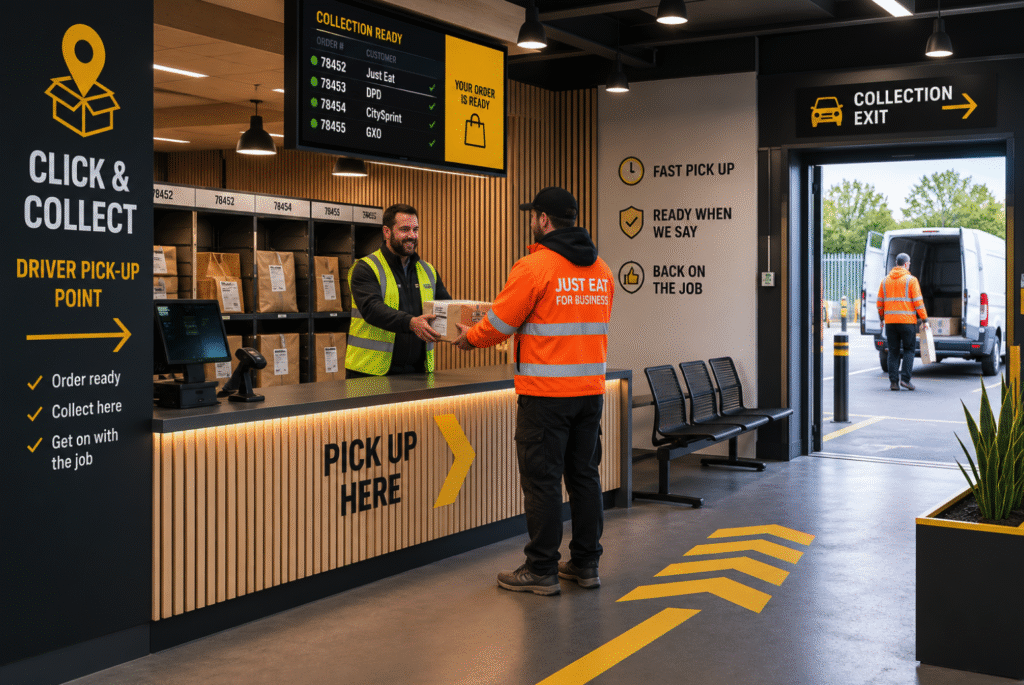
Many retailers and merchants are discovering that the physical branch now performs more roles than ever before, without necessarily having been redesigned to support them. Think how McDonalds outlets across the globe have been redesigned to meet the needs of the collection and delivery drivers and how this is likely to be the future direction for particularly Trade Merchants and Home and Garden retailers.
The next competitive advantage
As AI improves search, product recommendations and purchasing decisions, retailers may find that the competitive advantage shifts even further towards execution. Customers will increasingly arrive knowing exactly what they need and winning the sale will depend less on helping them find the right product and more on helping them obtain it quickly, accurately and without friction. That’s where Click & Collect becomes far more than a convenience feature, it becomes a demonstration of operational excellence. The
retailers that consistently deliver accurate online stock visibility, rapid fulfilment, transparent pricing, effortless collection and dependable service are also likely to excel across home delivery, trade fulfilment,
replenishment and customer satisfaction.
In many ways, Click & Collect is simply the visible tip of a much larger operational iceberg.
Final Thoughts
One of the biggest shifts in home improvement over the last decade is that customers increasingly value certainty over choice. They don’t necessarily want fifty options, they want confidence that the product is available, ready, and can be collected exactly when promised.
Retailers often treat Click & Collect as a digital capability. The best retailers understand it’s actually an operational capability; the website may take the order, but it’s the business behind it that keeps the promise.
Perhaps it’s time we stopped asking whether retailers offer Click & Collect and start asking how well they deliver it? Because in today’s convenience economy, every collection is a measure of operational excellence, and every successful collection is another reason for a customer to come back.
Steve Collinge is an international speaker, influencer, retail commentator and executive editor of Insight DIY. You can follow Steve on LinkedIn and X.