Transform your Cash Handling & Payment Processes with GLORY Ireland

Counting tills, checking floats, investigating discrepancies, preparing deposits, and completing reconciliation can take valuable time every day. In busy hardware and DIY stores, those minutes quickly become hours that could otherwise be spent supporting customers – shortening queues and helping staff serve more customers without adding pressure to already stretched staff.
Improving Accuracy, Security and Loss Prevention
Manual cash handling and payment acceptance, whether at the counter or in the back office, exposes hardware and DIY businesses to human error and heightened security risks. The traditional (manual) approach can put staff under pressure and distract them from providing the best experience for the customer, impacting overall business efficiency.
Manual cash handling and payment processes can also create opportunities for error – a mistyped payment amount, incorrect change, misplaced note, or unreconciled refund can all affect the accuracy of daily takings.
From small independent retailers to large DIY chains, GLORY’s automated cash management and payment solutions have significant benefits for hardware businesses. Helping you toefficiently manage your cash and payment processes, our solutions can improve security, accuracy, and efficiency, and can also enhance staff productivity, and help to reduce costs.
If you’re looking to decrease your time spent on manual cash handling, minimise time spent investigating cash discrepancies, and provide customers with a fast, easy to use and secure payment option, our cash management and payment solutions can help.

GLORY’s solutions not only free up staff to focus on more value-added activities but also support both front of house payment points and back office operations. Streamlining reconciliation, speeding up start and end of day processes, and simplifying cash preparation for lodgement, our solutions can connect all your cash and payment processes.
For hardware businesses with multiple tills or payment points, a portfolio of cost-effective solutions is available designed to cater for any hardware environment, including those with limited space. By optimising the number of devices required and centralising cash handling and payment acceptance, a business can save valuable time and reduce operational costs. Provide your customers with a fast, easy to use, secure payment option, or improve your back office cash handling processes, contact GLORY Ireland today. Donal Clavin – GLORY Ireland Sales Manager, donal.clavin@ie.glory-global.com,
Mobile: +353 87 332 9653.
Is Your Online Ordering Working As Hard As Your Sales Team?

Wholesale has always been built on relationships. Knowledge, service and trust remain the foundations of successful businesses, but one thing has changed dramatically over the last decade, the way customers want to buy.
Today’s business customers expect the convenience of online ordering alongside the personal service they’ve always valued. They want to check stock availability, view their agreed pricing, place orders outside normal business hours and access account information whenever it suits them. For wholesalers, meeting those expectations isn’t always straightforward.
Unlike retail, B2B trading is far more complex. Customer-specific pricing, credit terms, product catalogues, ERP integration and account management all need to work seamlessly behind the scenes. It’s why many wholesalers have found that traditional eCommerce platforms designed for consumers simply don’t always meet the needs of a wholesale business.
This was the challenge that inspired Premio.
Developed by Premier Stationery, one of Ireland’s leading wholesalers, Premio was created after the business experienced these same challenges first-hand. Rather than adapting software built for another market, the team developed a platform designed specifically around the way wholesalers and distributors operate.
Today, Premio enables customers to access live stock information, their own pricing, account details and online ordering through a platform that integrates with existing ERP systems. More importantly, it helps wholesalers enhance customer service by reducing routine administration and allowing sales teams to spend more time supporting customers and building relationships.
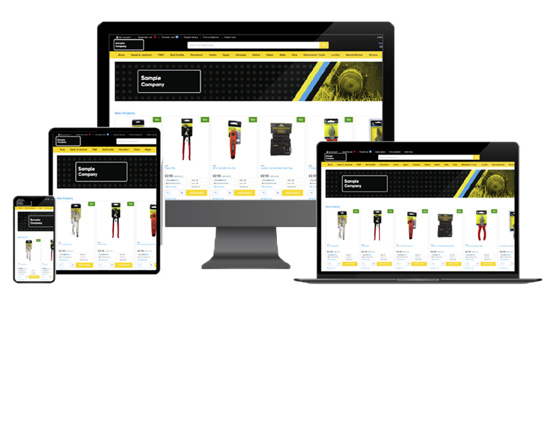
Digital transformation doesn’t mean replacing the personal touch that wholesale is known for. It means giving customers another convenient way to do business, while making everyday processes more efficient for both your team and your customers.
As customer expectations continue to evolve, wholesalers who embrace digital tools will be better positioned to strengthen customer relationships, improve efficiency and remain competitive in an increasingly connected marketplace.
If you’re considering how eCommerce could support your wholesale business, discover more about Premio and its approach to B2B digital commerce at www.premio.ie.
Payment Inefficiencies Cost Distributors More Than You Think
Lochan Sim, VP of Payments at Klipboard outlines the issue for The Hardware Journal.
Many distribution businesses still treat payments as an administrative task rather than a strategic part of their day-today operations. Yet how payments are handled can significantly influence liquidity, productivity, customer satisfaction, and overall profitability.
Distributors across Ireland are feeling the squeeze with tighter margins, rising costs, and more complex supply chains – all while trying to keep stock available, pricing accurate, and service levels high.
Finance and operations teams are also expected to process high volumes of trade transactions efficiently, reduce unnecessary manual administration, and maintain real-time visibility across purchasing, invoicing, and cash collection.
Yet many businesses still rely on disconnected payment systems which creates unnecessary manual work. This slows down reconciliation, making it harder to keep a clear picture of cash flow.
Recent Klipboard Money research, Payments in Distribution Report and industry discussions,
www.klipboard.com/payment-in-distribution, highlighted the scale of payment-related inefficiencies across distribution:
– 99% of distributors deal with late account payments.
– Over half spend more than six hours per week on manual payment admin.
– 81% use two or more payment providers.
When businesses review their payment setup, they often focus on the headline transaction rate. However, hidden costs frequently sit elsewhere within the process: manual reconciliation, time spent chasing invoices, payment errors, duplicate entry, delayed settlements, and fragmented systems all chip away at the bottom line.
According to findings in the report, over nine in ten distributors believe that offering more payment options will encourage greater loyalty. That loyalty can be worth more than acquiring new customers.
Distribution businesses in particular experience considerable friction from disconnected systems.
Finance teams often spend valuable time matching payments against invoices, handling payment queries, or manually updating records between systems. These processes slow operations down and increase the likelihood of errors and delayed cash collection.
How integrated payments change this dynamic
Payments taken online, over the phone, in branch, or through Pay by Link feed directly into the ERP system, helping automate reconciliation and giving accounts teams faster visibility of payments received.
This creates several tangible outcomes:
– Faster payment collection leading to improved cash flow.
– Reduced manual reconciliation and administration.
– Greater accuracy across accounts and reporting.
– Simpler, more flexible payment experiences for customers.
– Improved security and reduced fraud risk.
Modern trade sector customers expect simple, flexible payment options, whether they’re purchasing at the trade counter, through a webstore, or paying invoices remotely. Self-service portals, Pay by Link, QR code payments, and 24/7 online account access have become more common across the industry.
When payment methods sit outside the core business system, significant challenges appear. Separate systems can create extra admin, gaps in reporting and increased compliance risk through manual card handling or inconsistent processes.
Connecting payment activity directly into the ERP system helps bring everything into one place, giving accounts teams better visibility, less reconciliation work and customer account information that’s always up to date.
For Hardware Association Ireland members, connected payment workflows can simplify payment processing, improve visibility and help speed up cash collection. Discover a simpler approach to payments by speaking with one of our payment experts.
How Do You Know You’re Ready For ERP Go-Live?
Go-live shouldn’t be the first time you discover whether your stock, orders, payments or everyday processes work. Jordan Parker, Migration and Integration Consultant at GenetiQ, explains what to check before making the final switch.
Before go-live, what should you feel confident will work?
Your team should be able to complete the everyday work customers depend on: processing orders, checking stock, raising purchase orders, taking payments and using connected systems.
And how can you be sure the data has come across properly?
We compare the new system with information the business already trusts. During a test run, stock balances, costs and opening figures are brought across and checked against the current ERP.
Does everything from the old system need to come across?
No. Migration is a rare opportunity to review what the business still needs. Obsolete products, inactive suppliers, duplicate records and outdated customer information can make the new system harder to manage.
What should teams be testing before go-live?
The situations they deal with every day, including the awkward ones. That could include different product types, discounts, payments, website orders, purchase orders and connected systems.
Should all the knowledge sit with one person?
Ideally no. Two or three people should understand the important data processes.
How do teams know what needs to happen as go-live gets closer?
A clear cutover plan sets out what needs to move, when each task will happen and who owns it.
What if some staff still do not feel ready?
They need more time using the system. That could mean further testing, more time in the test environment or another walkthrough with the project team.
What support should you expect around go-live?
Regular communication throughout the project makes a big difference.
Finally, how does a team know it is ready?
The key processes have been tested, the figures have been checked, knowledge has been shared and everyone understands their responsibilities. The final switch should follow a process everyone has seen, tested and understood. GenetiQ was previously known as Intact. The name has changed, but the company, people, products and commitment to customers remain the same.
Find out more at www.genetiqsoftware.com.