The DIY and garden retail sector is at a pivotal moment. For decades, the model has remained largely unchanged: large format stores, product-heavy layouts, and a reliance on customers knowing what they need before they walk through the door.
But today’s customer is different, they’re less confident with practical skills, more digitally influenced, more time-poor, and increasingly motivated by inspiration rather than necessity. At the same time, expectations around convenience, sustainability and experience have been reshaped by other sectors.
So, what exactly do I think is going to change?
From products to projects
Perhaps the most important shift is also the simplest to understand, customers are no longer shopping for products, they are shopping for and expecting outcomes. Very few people walk into a store thinking about fixings, timber sizes or paint finishes in isolation. Instead, they arrive with a project in mind, they want to refresh a room, improve their garden, or tackle a job they have been putting off for months.
Historically, almost all retail stores (with the exception perhaps of IKEA) have been organised around product categories. Logical from an operational and buying perspective but often disconnected from how customers actually think. The store of the future flips this model on its head.
Instead of asking customers to find and assemble a solution themselves, the retailer presents the solution upfront.
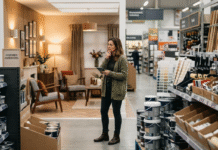
Complete project zones begin to replace traditional aisles and shelving. Customers are guided through the process, from inspiration to completion, with everything they need brought together in one place.
The importance of inspiration
Modern consumers are continually inspired by and discover ideas on social media, browsing beautifully curated content, and imagining what their homes could become. The role of the future physical store has to be about bringing that inspiration to life.
This is where I see one of the most visible changes. Stores becoming warmer, more engaging and more lifestyle-driven, not just places to buy products, but places to discover and explore ideas.
Room sets: styled displays and seasonal themes begin to take centre stage more than ever before. Customers can see what a complete project looks like, not just the components that go into it, they can touch materials, compare options and begin to
visualise their own spaces.
This shift is particularly important in broadening the appeal of DIY retail. For many consumers, particularly female customers, who are often key decisionmakers in the home, traditional ‘pile it high and sell it cheap’ environments feel uninviting and a more inspirational approach changes that dynamic entirely.
Confidence is the new currency
One of the defining characteristics of today’s younger DIY customer is a lack of confidence. Skills that were once passed down through generations are no longer as widespread. Many younger consumers simply haven’t had the exposure to practical tasks that would allow them to feel comfortable tackling projects on their own.
This creates a barrier, but at the same time, it’s a significant opportunity. The retailers who succeed in the future will be those who help customers feel capable. Not by simplifying the offer to the point of removing complexity, but by supporting customers through it.
This changes the role of the store, and of the people within it. Staff become guides and coaches rather than simply transactional assistants, the focus shifts from “what do you need?” to “what are you trying to achieve?”
Workshops, demonstrations and digital content all play an increasingly important role. Step-by-step guidance, whether delivered in person or digitally, becomes a key part of the shopping journey. The aim is no longer just to sell a product, but to enable a project.
Because when a customer completes one successful project, they are far more likely to start another, and your store will become the first place they choose to visit.
A seamless digital and physical journey
The starting point for most DIY journeys is no longer the store, it’s their phone. Customers arrive having already done their research, they have seen ideas online, compared options and prices, and often have a clear sense of the end result, even if they are not entirely sure how to achieve it.
This means that it’s essential that the store integrates seamlessly with the digital journey that precedes it.
We are in a world where the boundaries between online and offline retail have disappeared, customers expect real time stock information, rapid click and collect services, and the ability to move effortlessly between channels.
In-store technology will increasingly support this. Digital screens extending the range, QR codes linking to project lists, and mobile tools that guide customers through their journey.
But the key is not technology for its own sake, it’s about removing the friction. Making it easier, faster and more intuitive for customers to move from inspiration and idea to execution.
Convenience as the strategy
Convenience has become one of the defining battlegrounds in retail; customers expect speed, simplicity and reliability. Many of today’s customers have grown up with Amazon and their expectations of delivery and convenience are the same, whether they’re shopping for DIY, Grocery or Fashion.
Click and collect is now a baseline expectation, not a differentiator. The focus is shifting to how quickly and how smoothly it can be delivered. Dedicated collection points, improved store navigation, and clearer layouts all contribute to a better experience.
At the same time, stores must cater for different types of missions, some customers want to get in and out quickly, while others want to browse, explore and be inspired.
Rethinking range and space
Today’s customers are often overwhelmed by too much choice, when what they are really looking for is clarity and confidence that they are making the right decision. This is leading to a more curated approach both in-store and online. Fewer, but better products, clearer good-better-best options and more emphasis on quality and relevance rather than sheer breadth and volume.
In the future store, physical space will be rebalanced, with less focus on offering endless variations and a greater priority given to showcasing solutions and creating experiences. Digital tools can then extend the range beyond what is physically present. It is a shift from quantity to quality, from storage to storytelling.
The evolution of garden retail
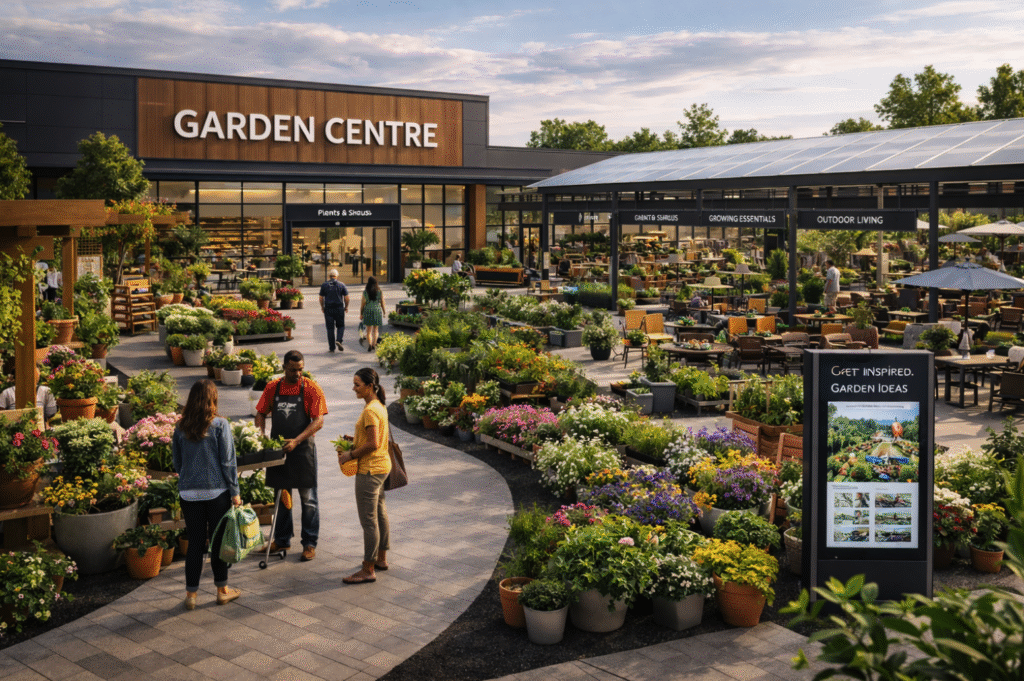
Alongside DIY and Home Improvement, garden retail is undergoing its own transformation. What was once seen as seasonal and task-driven is increasingly becoming lifestyle-led and all year-round.
For more and more consumers, the garden is no longer just a space to maintain, it’s an extension of the home, a place to relax, entertain and express personal style.
This continues to drive growth in categories such as outdoor living, furniture and décor and it’s also creating opportunities to develop more experiential environments, incorporating elements such as café and leisure spaces.
At the same time, the focus on sustainability and biodiversity is reshaping how gardens are presented and understood. The future garden centre is as much about inspiration and enjoyment as it is about plants and products.
The store as a community space
One of the enduring strengths of the Irish Hardware Sector has been its connection to local communities and that strength becomes even more important in the future.
As retail becomes more digital, physical spaces must offer something that simply cannot be replicated online, connection, interaction and shared experience.
Workshops, events and partnerships all help to position the store as more than just a place to shop, it becomes a place to learn, to engage, and to feel part of something local. This not only drives footfall, but builds loyalty and deeper, more meaningful relationships with customers.
Looking ahead
Taken as a whole, these changes represent a significant shift in the role of the future DIY and garden store. The retailer moves from product supplier to project enabler, from a simply transactional space to an inspirational environment and from a standalone channel to an integrated experience.
For retailers, the opportunity is clear, build on existing strengths – trust, community and expertise – while embracing new ways of engaging customers.
Steve Collinge is an international speaker, influencer, retail commentator and executive editor of Insight DIY. You can follow Steve on LinkedIn and X.