The Foundations: Is Your Hardware Store Working for You?
What if your store environment could work harder for your bottom line? This article is the first in a series focused on helping hardware and building materials retailers rethink their store environment from a commercial perspective. The objective is simple: to encourage store owners and operators to step back, assess their physical space with fresh eyes, and recognise how intentional store design can actively improve performance.
Building materials and hardware retail has always been built on strong fundamentals; knowledgeable staff, deep product range and long-standing customer relationships. Many stores have grown steadily over decades through sound decision-making and close ties to the community.
Growth, however, often happens in layers!
A new category is introduced. More stock-holding space is required. A promotion is added. A supplier display arrives. Seasonal products shift position. Signage goes up to support new ranges. Over time, the store becomes a collection of solid decisions made at different stages of the business.
That evolution reflects resilience. Yet every successful store benefits from asking a strategic question: Is the store’s design and structure actively supporting performance?
Because layout is not simply operational. When approached intentionally, it becomes a commercial asset that influences customer behaviour, staff efficiency and profitability.
The First Ten Seconds
Store design begins at the entrance.
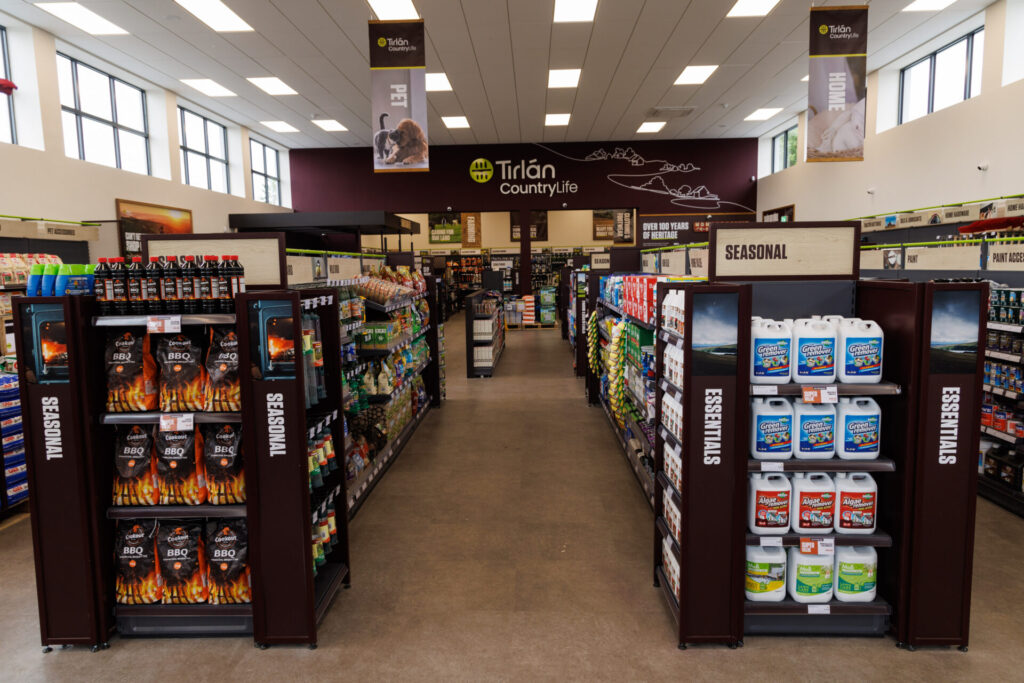
When a customer walks into your store, they form an impression almost instantly. Within the first ten seconds, they decide whether the environment feels organised, professional and easy to navigate. Our store design for Tirlán in Monasterevin is a good example of this in action. As customers enter the store, the layout immediately feels clear and structured. Large overhead banners clearly identify the key departments, allowing shoppers to quickly understand how the store is organised while also reinforcing the Tirlán brand throughout the space.
The result is a store environment that communicates confidence and clarity from the moment you walk through the door. Clear sightlines, strong zoning and well- considered presentation allow the design to speak for itself without needing explanation.
From your own doorway, consider what a first-time customer sees.
- Can they clearly identify your main departments?
- Is it obvious what type of hardware store you are?
- Do they see structure or visual overload?
Good store design communicates immediately through zoning, lighting and hierarchy. Clarity builds trust, and trust influences spending.
Long-standing customers may know your layout instinctively. New customers do not. A store that is easy to understand from the outset supports both.
Busy Is Not the Same as High Performing
Building materials and hardware retailers rightly take pride in strong stock depth. Full shelves communicate capability and reliability. The challenge is balancing range with ease of navigation.
High-performing stores combine comprehensive stock with clear department zoning, logical category adjacencies, and intuitive pathways. Related products sit together. Key categories are visible from important sightlines. Movement feels natural. Effective store design reduces friction.
Customers should be able to locate what they need quickly while still discovering additional products. When layout is intentional, staff spend less time giving directions and more time offering advice.
Advice adds value. Direction consumes time. That distinction has a measurable commercial impact.
What Strong Foundations Look Like
Strong foundations are not about expensive refits. They are about the clarity of design thinking.
They typically include:
- Clear department zoning visible from key sightlines
- Logical placement of related categories
- Defined customer flow
- Prominent positioning of products that represent your store identity
- A communication hierarchy that prioritises what customers see first
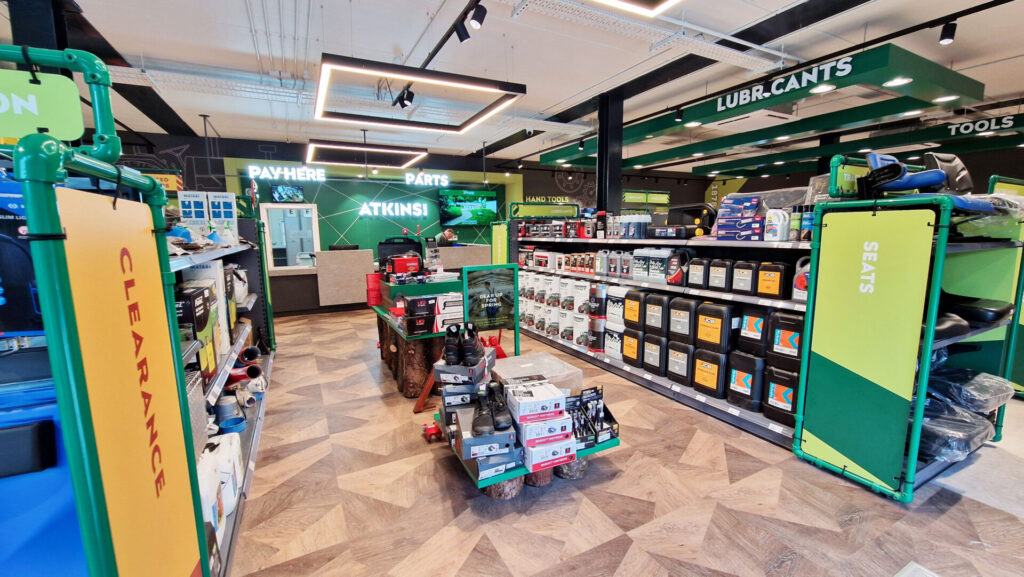
At Atkins Farm & Garden Store in Bandon, Co. Cork, the service counter is clearly visible from the entrance. Customers instantly have a reference point. They know where to go if they need support. That single design decision improves navigation and reinforces service as a core strength.
Store design is about prioritisation. Deciding what matters most and giving it presence.
Stand at your entrance and identify your three strongest margin categories. Are they visible early in the journey? Walk your main aisle. Is there a clear focal point? Customers process information in layers. Well-designed environments support that process.
Structure Supports Growth
Independent building materials and hardware retailers hold significant advantages. Agility, local knowledge, generational loyalty and community trust.
The physical store should reinforce those strengths. A well-structured layout makes seasonal changeovers smoother. It allows new categories to integrate seamlessly. It supports clearer promotions and stronger supplier presentations. It elevates brand perception while maintaining local character.
Stores with strong structural thinking are easier to refresh, extend or modernise. They adapt to change with confidence.
Conclusion: Laying the Foundations
If you were opening your builders merchant or hardware store today, what would you prioritise?
- Clear zoning.
- Visible expertise.
- Strong category presentation.
- Calm, confident communication.
The next steps to laying strong foundations are practical:
- Begin with an honest walk-through of your store from the entrance.
- Identify what customers see first.
- Clarify your strongest categories.
- Refine visual noise.
Strengthen reference points such as counters or service areas. Meaningful improvements often come from considered structural adjustments rather than large capital investment.
Building materials and hardware retail remains one of the most resilient sectors. When the physical environment is intentionally designed to support your expertise and service, the store becomes a powerful commercial asset.
Strong foundations are not about decoration or trend. They are about intelligent store design that supports long-term performance.
Peter can be contacted at peter@rigneyforge.ie or visit www.rigneyforge.ie for more information.

Peter Rigney is Founder and Creative Director of Rigney Forge, a retail design studio based in Co. Westmeath. With experience across hardware, grocery, garden centres and hospitality, Peter and his team specialise in creating high-performing store environments that combine commercial strategy with strong brand identity. Rigney Forge works with independent and multi-site retailers across Ireland, helping businesses modernise and strengthen their in-store experience through structured, insight-led design.