Laying Wood Flooring In 17th Century: A Brief History
What has dancing 340 years ago, King Louis 14th of France and Wilhelm II of Germany got to do with glueless and nailless fixings systems for wood floors? The Hardware Journal has asked our colleague and well-known wood expert John McCabe to explain.
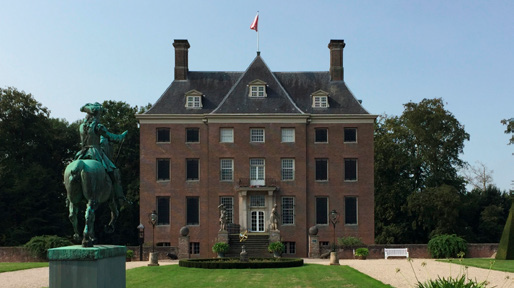
The earliest known system I am aware of for laying wood flooring without glue or surface nailing was developed in 1687, tongue and groove was not common at this time. The place was Amerongen Castle in the province of Utrecht, which at this time was known as the United Provinces and West Friesland, which later in 1813 became The Netherlands (Holland is two of the 12 provinces – north and south).
To set the scene.
In 1673 Louis 14th of France, the sun king, was withdrawing his troops from present day Netherlands, after 13 years of warfare. His army was retreating along a dry ridge. This area is known as the Utrecht Hill Ridge (Utrechtse Heuvelrug) and is one of the few places in The Netherlands that is above sea level at 10 to 15 feet.
The French were leaving for a number of reasons. One of which was that The Netherlands defense was built around flooding those areas that were below sea level. When you realise that three major European river systems flow into the sea in The Netherlands, you can understand how they can do this quite easily. The three rivers are the Rijn, Maas and Waal. This had the effect of making it extremely difficult to transport cannons and all the provisions for an army. The French troops decided in retreating that they would implement a policy of “pay up or we burn your property”.
Amerongen Castle, where we are focusing on in this story, had been reconstructed three times since the 13th century. The lady of the house in 1673 was Margaretha Turnor, wife of nobleman Godard Adriaan van Reede (aka General Ginkel in the Battle of the Boyne/Augrim/Limerick) was faced by a French demand to pay 3,000 guilders in silver coin or they would burn the castle to the ground and destroy all the trees on the estate by cutting them down. Margaretha made her brave choice and refused to be blackmailed or coerced by the French military. Amerongen Castle was totally destroyed as were its woodlands.
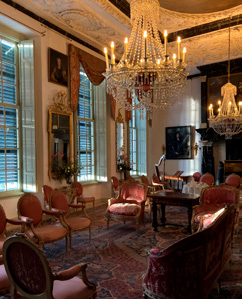
In 1674, one year later, Margaretha started to rebuild Amerongen Castle. It took 13 years to complete. In the meantime a family friend, Frederic William, elector of Brandenburg, Duke of Prussia, based in Berlin, upon hearing the news sent 130 cubic metres of Norway Spruce logs to assist in the reconstruction. When they reached the Castle interior, and in particular the music room, Margaretha insisted that the floor be secured in place without nails, the norm at the time was face nailing floors. The reason she asked for this was because she loved to dance and surface fixing by nails would cause her silk stockings to tear/ladder.
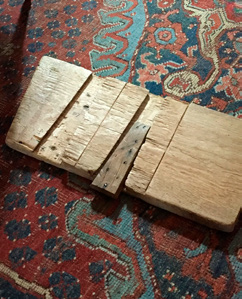
The master carpenter came up with the solution that you see in the picture. He took the standard dove tail joint, which is commonly used to connect the sides of drawers with the drawer face, and developed from that a sliding dove joint with a reducing angle of one to six from end to end. The flooring was made from Norway Spruce, as mentioned, and the wood used to make the insert was Oak. It simply locked the floorboards together.
This would be very good wood working in a cabinet of the period, but to have this clever jointing system in a huge floor was masterful. The music room was roughly 60ft by 22ft.
The room has one further claim to fame. Amerongen Castle was also used in 1918/1919 as a temporary refuge for Kaiser Wilhelm II, who fled Germany at the end of WW1. With The Netherlands Government permission, the Kaiser arrived at Amerongen Castle to stay for two days, but to the acute ongoing embarrassment of both the owner of the castle (now the Bentinck family) and the Dutch Government, he stayed 18 months.
This delay in moving him out of Amerongen Castle is reputedly because his next home, Doorn House, a few miles away, was not ‘ready’ to his liking. It was in the room next to the afore mentioned music room that Kaiser Wilhelm II signed his abdication letter in 1918, some weeks after the end of the first World War.
“Today, whether you are a dancer or not, you have access to a great many glue less/nail less wood flooring systems that will not tear your stockings”. John McCabe is based in the Utrecht region of The Netherlands. He has acquired during his lifetime of working in the hardwood and decorative softwood trade an expert knowledge of woods, grades etc. In particular he is specialised in sourcing wood and wood products for clients internationally. John has also been involved in the wood flooring industry, designing and problem solving in the industry.
In the recent past, John has worked with Hardware Association Ireland in hosting training events and workshops for hardware stores and builders merchants staff on selling and fitting advice for wood flooring, emphasising product knowledge and problem avoiding. He can be contacted at john@mccabewood.com
Make More Of Your Flooring Showroom
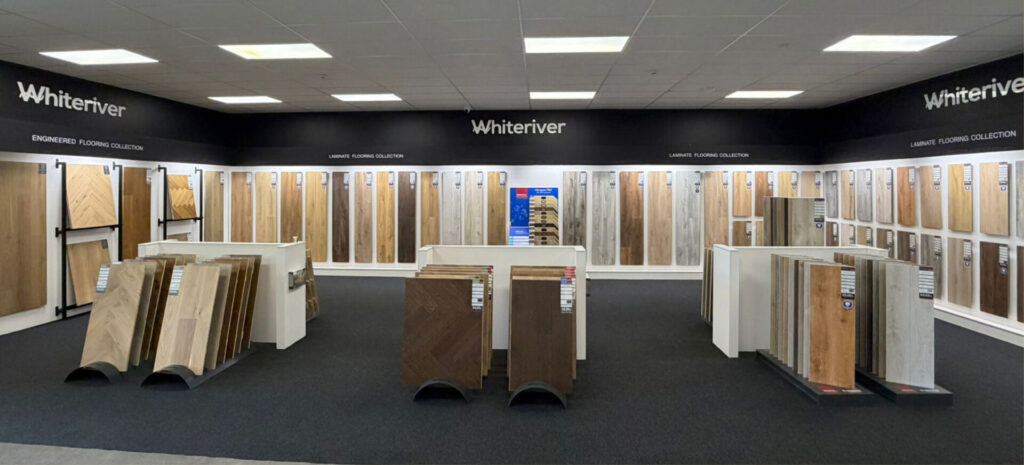
Whiteriver Group helps builders’ merchants and flooring retailers improve their displays and gives their teams practical support to sell flooring.
A well-planned flooring display makes it easier for customers to compare products and for staff to explain the options. For a merchant or retailer, it is also a chance to make better use of the space available and give the flooring range the attention it deserves.
Whiteriver Group works with merchants and retailers on showroom fit-outs and revamps, supported by a broad flooring range, samples and sales materials. Whether you are updating an existing display or planning a larger refurbishment, Whiteriver can discuss with you how to make the most of your flooring area.
Showroom fit-outs and revamps
Good presentations help customers see what a floor will look like in their own home. Whiteriver work with you on displays that show the range clearly and make it easier to compare colours, finishes and formats.
Alongside the displays, their hand samples, swatches and point-of-sale materials help your team talk customers through the choices. Brochures give customers something to take away and refer to as they make their decision.
A choice of flooring and outdoor ranges
The flooring range includes laminate, SPC and engineered timber, with a choice of styles and finishes. They continue to develop the collection as new products become available and customer preferences change.
Whiteriver also supplies composite decking and cladding, giving merchants and retailers further options for customers planning outdoor projects.
Samples and product information
The brochures bring the ranges together in one place, helping staff and customers compare products and check specifications. Hand samples and sample boxes for architects and designers allow a closer look at colour, texture, finish and construction.
Where a project requires formal specification, their product information on the National Building Specification (NBS) Platform, www.thenbs.com, provides an additional resource for architects and specifiers.
Talk to us about your showroom
If your flooring display is due a refresh, or you are considering a more extensive revamp, talk to the Whiteriver team about your plans. They can discuss showroom presentation, retail displays and the sales materials available to support your team.
Contact sales@wrg.ie or call +353 (0) 41 686 1000. View the range at www.wrg.ie.
Introducing Neptune: Canadia Launches New SPC Collection
Water has always been flooring’s biggest enemy. Canadia’s new Neptune Collection turns that weakness into a selling point.
Built on a five-layer SPC (Stone Polymer Composite) construction, Neptune pairs a waterproof core with a scratch and UV resistant wear layer, a stain shielding protection layer, and an integrated underlay for warmth and sound insulation underfoot. The result is a floor that is dimensionally stable, with a Class 34 rating – tough enough for busy family homes and commercial spaces alike, backed by a 30 year domestic and 10 year commercial warranty.
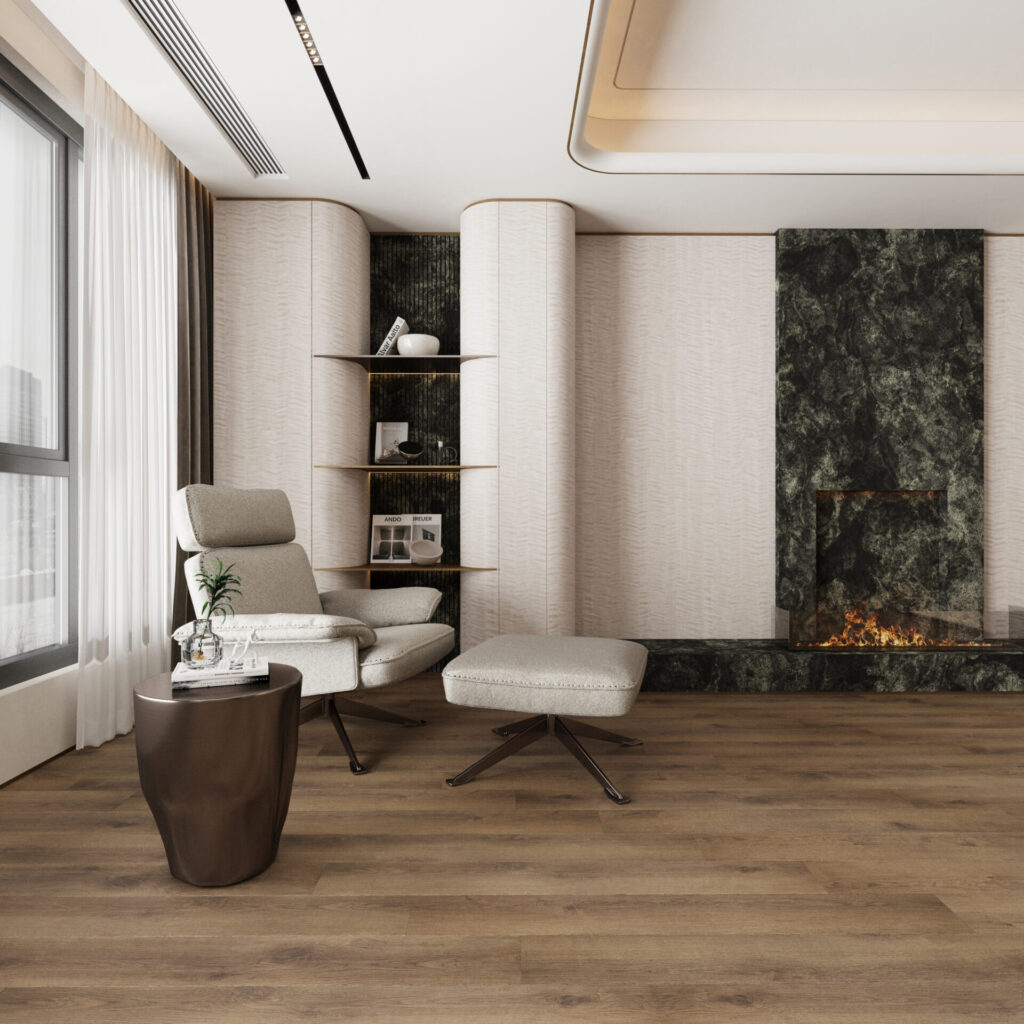
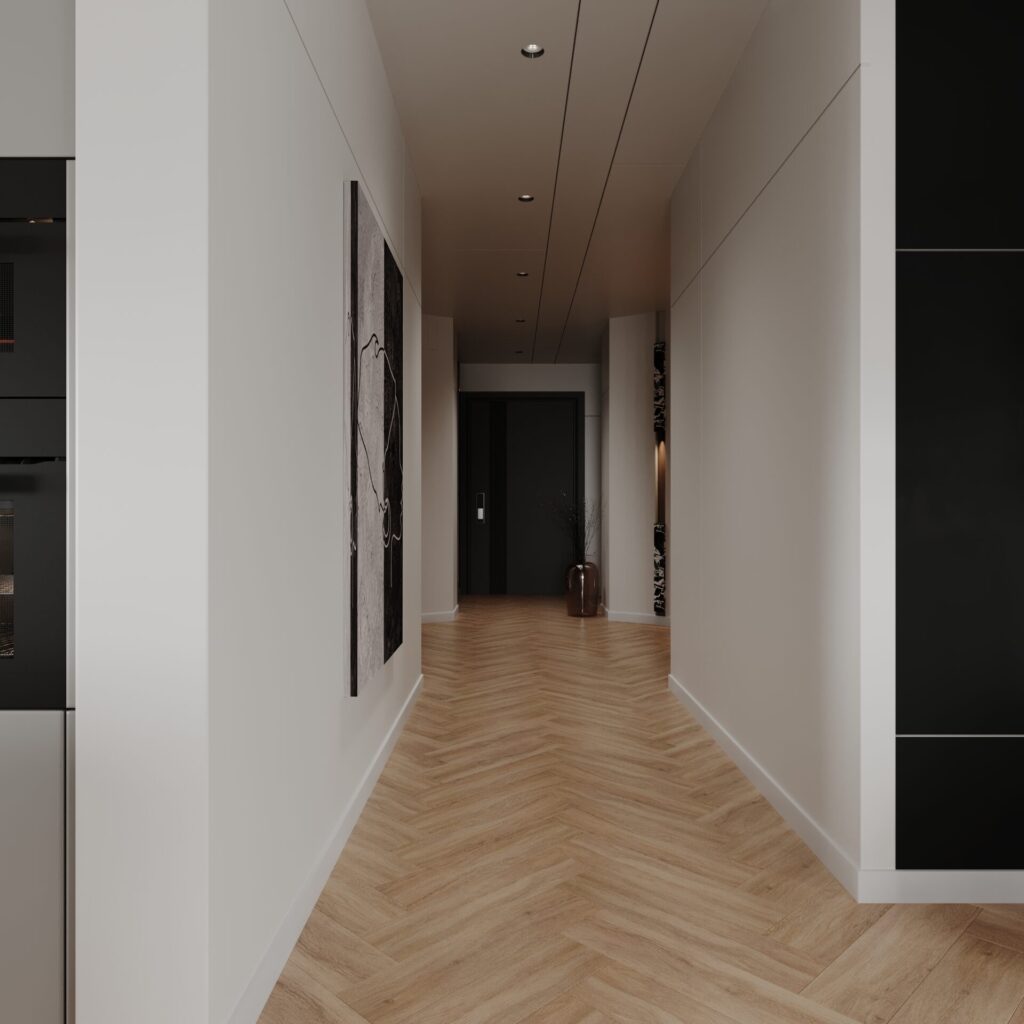
For retailers, the real story is choice. Neptune launches with five new oak décors – Harbour Mist, Riptide, Silver Stream, Lagoon Sand, and Coastal Drift, each rendered in high-definition detail for a natural, believable wood look. Every shade is available as a standard plank (1219 x 229mm) and as a matching herringbone (600 x 153mm), so customers can move seamlessly from a classic layout to a statement parquet pattern without stepping outside the palette. That pairing gives showrooms an easy upsell: once a customer commits to a décor, herringbone becomes a natural upgrade conversation.
Installation is where Neptune earns its keep on the shop floor. The range uses I4F’s proven drop-lock system, keeping fitting fast and joints tight, a point installers will thank you for. Add slip resistance, antibacterial properties, and pet and kid friendly performance, and Neptune ticks the boxes that dominate today’s flooring conversations: durability, hygiene, and family living.
Positioned between laminate and traditional vinyl, SPC continues to be one of the fastest growing categories in flooring, and Neptune gives retailers a collection that competes on both performance and looks. The soft tones sit comfortably in kitchens, hallways, and living spaces where moisture and footfall are constant concerns – exactly where customers are currently trading up.
Neptune is available now through Canadia. For samples, information or to discuss stocking the collection, contact your Canadia representative or email the team a info@canadia.ie. Product information is also available at www.canadia.ie.
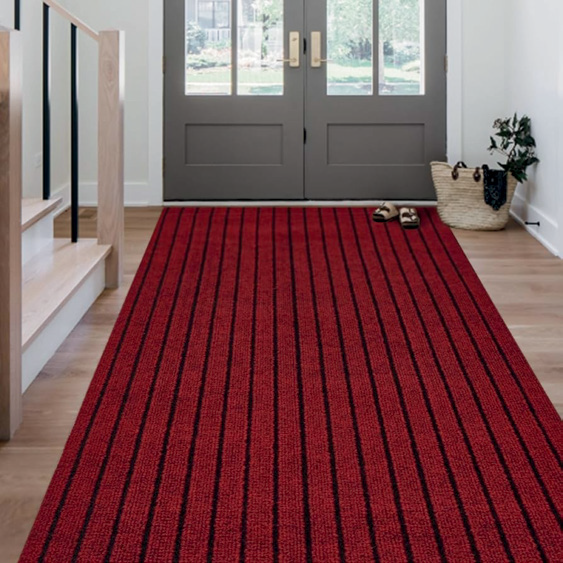
Trojan Harmony Runner Matting – Non-Slip Backing
Trojan has launched its new Harmony runner matting, and for DIY retailers, the standout format is the pre-cut 2.4m x 80cm roll. Designed with convenience in mind, it’s a ready-to-go size that requires no cutting or measuring, making it a perfect impulse purchase for customers passing through the aisle. Whether it’s for protecting a hallway, landing, or any other high-traffic area at home, Harmony offers a quick, no-fuss solution that fits neatly into how DIY shoppers actually buy, see it, grab it, use it.
Beyond its practicality, Harmony brings a stylish, durable finish that holds up well to everyday wear, backed by a latex non-slip base that keeps it firmly in place underfoot, giving customers confidence they’re getting a safe, quality product without the hassle of trade-sized rolls. For those tackling bigger projects, such as a full landing, or a larger commercial-style installation, the full 20m roll is also available, offering the same quality, design, and non-slip backing in a format suited to larger jobs.
Harmony further extends Trojan’s growing matting offering, which already includes non-PVC dirt trapper barrier mats, ideal for entrance ways looking to reduce dirt and moisture ingress and a recycled collection made from car and truck tyres, appealing to environmentally-conscious customers and retailers alike. Together, these ranges give DIY retailers a wellrounded, sustainability-conscious matting offering to shelve with confidence.
For more information on Harmony runner matting or the wider Trojan range, contact info@dssupplies.com.