The Home Improvement industry enters 2026 in a very different place to where it stood just a few years ago. The extraordinary demand spikes of the pandemic era have faded, cost inflation and increasing labour costs have reshaped margins, and both trade and retail customers are more time-poor, better informed and far less tolerant of friction.
Across builders’ and plumbing merchants, DIY retailers and specialist distributors, the same challenge keeps surfacing: how to deliver a faster, simpler and more predictable service to customers, while operating in a cost environment that exposes every inefficiency. Looking across the UK and Europe, six trends are already shaping the markets and as we progress deeper into 2026, they will become
impossible to ignore.
1 The Branch Is Being Re-engineered, Not Replaced
Predictions of the death of the physical branch continue to miss a fundamental truth: location still matters, and it always will in the Home Improvement sector.
What is changing is not the existence of branches, but their purpose. The most effective branches are no longer designed primarily as stock holding, transaction locations. Instead, they are being reshaped around three core roles: local fulfilment hubs supporting fast availability, problem-solving centres where staff expertise adds real value beyond price, and where relationships unlock long-term loyalty. Routine transactions including re-ordering, pricing, product specification and basic stock checks are increasingly moving to digital channels. What remains in-branch are the interactions that genuinely benefit from human involvement: product specification queries, product substitution, complex orders and relationship management.
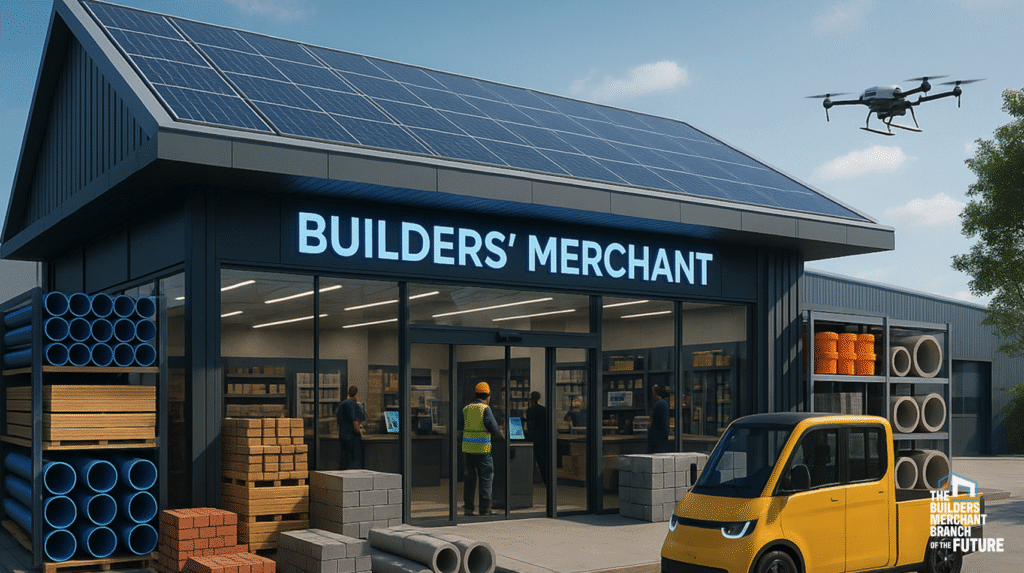
Branch after branch and shop after shop, the same issues remain: product layouts, staffing models and KPIs still reflect transaction volume rather than customer value. In 2026, the re-engineering of branches will become less about cost reduction and more about unlocking productivity. Those who succeed will design branches around speed, fulfilment and expertise, not simply throughput.
2 Convenience Becomes the Battle Ground
Price will always matter in the Home Improvement sector, but its relative importance is now beginning to shift. Increasingly, convenience determines the retailer or merchant who wins the order. Across multiple retail markets, convenience has quietly overtaken marginal price differences as the most reliable driver of loyalty. A customer who saves time, avoids disruption and reduces uncertainty will often accept a small price premium.
However crucially, convenience cannot just be bolted on. Same-day or next-day delivery only works when stock accuracy is high, branch processes and transport capacity are properly aligned, and staff are trained. Poor execution in any one area quickly undermines the entire proposition.
In 2026, convenience is no longer just a tactical initiative, it’s a strategic discipline and those who still treat it as an add-on will feel it in lost share and ultimately eroded margin.
3 Digital Maturity Becomes the Industry’s Dividing Line
Most retailers and merchants now have some form of digital ordering capability. What matters is how deeply digital is embedded into the operating model. In 2026, the gap between digitally mature businesses and digitally superficial ones will be impossible to hide.
Digitally mature operators use their platforms to reduce manual workload in branches, improve pricing discipline, strengthen customer retention through ease of use and increased share of wallet from existing accounts. Their systems are properly integrated with their ERP, pricing, credit management and fulfilment operations, allowing data to flow cleanly across the business.
Less mature organisations still rely heavily on phone calls, emails and manual intervention for basic tasks. This creates unnecessary friction for customers and absorbs valuable staff time that could be deployed far more productively.
Digital is no longer an experiment, a pilot or a side project. It is an operational requirement and in 2026, it becomes a margin protection and efficiency tool, and those who fail to recognise this will find themselves increasingly exposed.
4 Data is a Strategic Asset
In 2026, data is increasingly being used to support practical, day to day commercial decisions, including local range optimisation, more accurate demand forecasting, identification of unprofitable business, smarter credit management and better-informed supplier negotiations.
Crucially, this shift does not require complex platforms or investment in AI; the biggest gains come from improving the visibility of existing data, consistency and discipline.
A recurring challenge in our industry is always data quality. Inconsistent product descriptions, product and case dimensions, fragmented customer hierarchies and unclear pricing structures all limit the value data can deliver. Too many businesses rush toward sophisticated analytics before addressing these fundamentals and we all know the old IT adage ‘garbage in and garbage out’.
Those who invest time and resource in getting the basics right will unlock competitive advantage from the existing information they possess. In 2026, data will quietly become one of the most valuable assets on a company’s balance sheet.
5 Range Rationalisation Becomes a Profit Strategy
In 2026, we’ll see more businesses adopting a disciplined approach to range, characterised by fewer overlapping SKUs, deeper availability on core lines, clear good-better-best architecture and greater socalisation by branch or region.
This is not about limiting customer choice; it is about respecting how customers actually buy. Carrying excessive range ties up valuable working capital, increases operational friction and often results in poor availability of the products that customers matter most.
For suppliers, this shift raises the stakes. Gaining in-store listings becomes more competitive, but also far more meaningful. Those who can demonstrate excellent availability, consistent quality and genuine commercial partnership will stand out. Range rationalisation, done well, is not defensive, it is one of the most underused profit levers in the sector.
6 People and Expertise Become the True Differentiator
In 2026, basic order-taking will continue to decline as a primary function. What increases in importance is problem-solving capability, the ability to help customers navigate product choices, technical challenges and time constraints. This shift places greater emphasis on staff training and product knowledge, clear role definition, empowerment rather than supervision and the retention of experienced staff.
The risk lies in digitising existing processes without redesigning team roles. When people are left managing exceptions without clarity or authority, frustration and attrition quickly follow. The opportunity is significant. Businesses that redeploy experienced teams toward higher-value customer interactions, such as product specification support, project inspiration, guidance and account development, strengthen customer relationships in ways that technology alone cannot replicate.

The Strategic Choice in 2026
These six trends are not independent forces; they actually reinforce each other. Digital maturity enables better data – better data supports range rationalisation – range rationalisation improves convenience. Convenience strengthens relationships – strong relationships allow people to deliver more value.
The strategic choice facing Home Improvement businesses in 2026 is whether to acknowledge these shifts and act decisively, or to continue operating with structures and assumptions inherited from an
era that has now passed.
Those who move with clarity, re-engineering their branches, prioritising convenience, developing their digital capability, leveraging their existing data, rationalising ranges and empowering their people, will define the next phase of this industry.
Those who hesitate will find 2026 far more challenging than it needs to be, not because the market is slow or broken, but because their operating model is.
Steve Collinge is an international speaker, retail commentator and industry influencer. He is Managing Director of Insight Retail Group Ltd and Executive Editor of Insight DIY, and works extensively with merchants, brands and suppliers across the UK and Europe to help successfully digitally transform their businesses.
Follow Steve on LinkedIn and X.